sexta-feira, 15 de abril de 2022

The secret of happiness


A lonely and grumpy old man made a point of despising all the villagers.

He didn't greet anyone, he refused to participate in meetings or gatherings, and when he addressed someone it was to insult and offend.

Close to turning 100 years old, he regretted having spent his entire life looking for happiness, without ever having approached it.

Until the day he reached a century of existence, he was seen in the square playing with children, telling anecdotes, cheering those who approached, dancing like a lucky man.


With the reading of the book “The secret of happiness” you will know the story of the hermit and the events that, at the end of his life, transformed the old grumpy man into a fun and happy man.

To learn more about the book, click here.


All of them present simple and inspiring stories designed to enable communion between parents and children.

In a playful way, each book presents a narrative where fun teachings stand out. They are lessons based on the philosophy that interacts meditation and conduct. But not any mental contemplation and any action, but meditation and conduct that are anchored in critical reflection.

How to deal with problems, from the simplest and most ordinary - which emerge from day to day - to the most serious and complex? More than that, how to process them without losing sight of creativity and rationality, putting principles and values on the same scale, self-esteem and collectivity, respect for differences and tolerance, fraternity and solidarity.

The need to keep emotions in a state of equilibrium, the stimulus to curiosity and investigation, the impetus to successive questions, the importance of giving relevance to informal education as well, the development of skills that make it possible to deconstruct thinking in order to reconstruct it in new ways bases, are some of the inputs explored in the books of the Collection.

How to think better? Wouldn't happiness be in the little things that are tangled up in everyday life? And as for justice, democratic principles and ethical values, are they not the pillars that support the virtuous man? These are questions that the author developed and that structure the scenarios present in the stories, a privileged space where parents and children - through readings and discussions - will learn from each other.

Each child is a unique and special being. This is the reference of the 10 books in the collection:


Book 1. The little Zen panda
Book 2. The little Zen frog
Book 3. It is better to think before you speak
Book 4. Challenges are needed
Book 5. Peace is the basis of everything
Book 6. Kindness can do everything
Book 7. The secret of happiness
Book 8. The beautiful and rich woman and her ugly and poor sister
Book 9. The little Zen cat
Book 10. The little Zen dog

The autor:

In the search engine of the amazon.com.br website, type “Antônio Carlos dos Santos” and access dozens of works by the author.

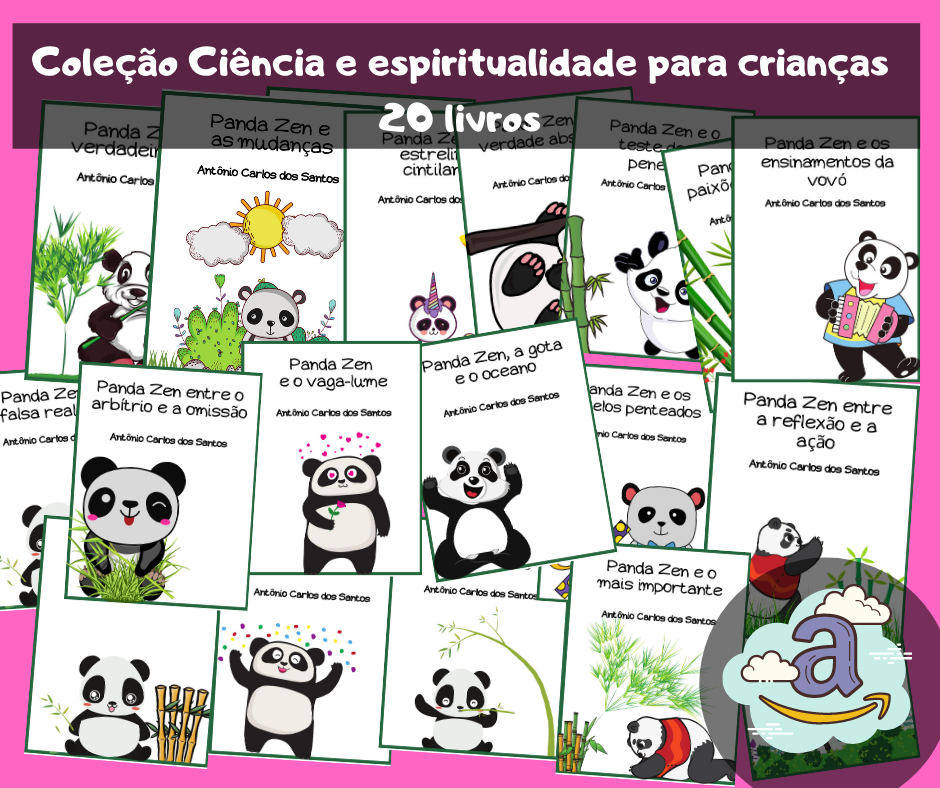
See, below, the ten books of the Collection:


To learn more, click here.


To learn more, click here.

To learn more, click here.


To learn more, click here.

To learn more, click here.

To learn more, click here.

To learn more, click here.

To learn more, click here.

To learn more, click here.

To learn more, click here.


__________________________________________


Para saber mais, clique aqui. 


Para saber mais, clique aqui.


Coleção Greco-romana com 4 livros; saiba aqui. 


Coleção Educação e Folclore com 10 livros, saiba aqui. 


Coleção Educação e Democracia com 4 livros, saiba aqui. 


Coleção Educação e História com 4 livros, saiba mais. 


Para saber mais, clique aqui. 


Para saber mais, clique aqui. 


Para saber mais, clique aqui.

Para saber mais, clique aqui.

Para saber mais, clique aqui.


quarta-feira, 13 de abril de 2022

Kindness can do everything


THE BOOK:

In a distant kingdom an authoritarian and very oppressive king reigned.

The monarch's fame crossed borders, and his reputation was not the best.

The sovereign created a pack of wild and ferocious wolves.

When his subjects made a mistake, he did not hesitate, condemning the servant to immediate death, without mercy or forgiveness.

The punishment consisted of throwing the condemned person into the arena to be devoured by the brutal animals.


Follow, with the reading of the book “Kindness can do everything”, the trajectory of an elder condemned to death who managed to obtain the forgiveness of one of the most cruel medieval kings.

To learn more about the book, click here.


All of them present simple and inspiring stories designed to enable communion between parents and children.

In a playful way, each book presents a narrative where fun teachings stand out. They are lessons based on the philosophy that interacts meditation and conduct. But not any mental contemplation and any action, but meditation and conduct that are anchored in critical reflection.

How to deal with problems, from the simplest and most ordinary - which emerge from day to day - to the most serious and complex? More than that, how to process them without losing sight of creativity and rationality, putting principles and values on the same scale, self-esteem and collectivity, respect for differences and tolerance, fraternity and solidarity.

The need to keep emotions in a state of equilibrium, the stimulus to curiosity and investigation, the impetus to successive questions, the importance of giving relevance to informal education as well, the development of skills that make it possible to deconstruct thinking in order to reconstruct it in new ways bases, are some of the inputs explored in the books of the Collection.

How to think better? Wouldn't happiness be in the little things that are tangled up in everyday life? And as for justice, democratic principles and ethical values, are they not the pillars that support the virtuous man? These are questions that the author developed and that structure the scenarios present in the stories, a privileged space where parents and children - through readings and discussions - will learn from each other.

Each child is a unique and special being. This is the reference of the 10 books in the collection:


Book 1. The little Zen panda
Book 2. The little Zen frog
Book 3. It is better to think before you speak
Book 4. Challenges are needed
Book 5. Peace is the basis of everything
Book 6. Kindness can do everything
Book 7. The secret of happiness
Book 8. The beautiful and rich woman and her ugly and poor sister
Book 9. The little Zen cat
Book 10. The little Zen dog

The autor:

In the search engine of the amazon.com.br website, type “Antônio Carlos dos Santos” and access dozens of works by the author.

See, below, the ten books of the Collection:


To learn more, click here.


To learn more, click here.

To learn more, click here.


To learn more, click here.

To learn more, click here.

To learn more, click here.

To learn more, click here.

To learn more, click here.

To learn more, click here.

To learn more, click here.

terça-feira, 12 de abril de 2022

Garimpeiros exigem sexo com meninas e mulheres ianomâmi em troca de comida, aponta relatório

Povo ianomâmi é considerado de recente contato — Foto: Valéria Oliveira/g1

Relatório foi divulgado pela Hutukara Associação Yanomami (Hay) nesta segunda-feira (11). Documento também aponta que o garimpo cresceu 46% na reserva indígena durante o ano passado.


Garimpeiros exigem sexo com meninas e mulheres indígenas como moeda de troca por comida na Terra Yanomami. É o que aponta o relatório da Hutukara Associação Yanomami (Hay), divulgado nesta segunda-feira (11).

As informações foram antecipadas pelo jornal "O Globo" neste domingo (10). O documento traz relatos de indígenas, pesquisadores e antropólogos, e mostra que ao menos três adolescentes, de até 13 anos, ficaram doentes e morreram em 2020 após os abusos praticados pelos garimpeiros.

"Elas eram novas, tendo apenas tido a primeira menstruação. Após os garimpeiros terem provocado a morte dessas moças, os ianomâmis protestaram contra os garimpeiros, que se afastaram um pouco. As lideranças disseram para eles [garimpeiros] que estando tão próximos, se comportam muito mal.”, diz o relato de uma pesquisadora indígena após conversa com uma mulher ianomâmi.

Na região do Rio Apiaú, os moradores relataram à Hutukara que um garimpeiro que explora a região ofereceu drogas e bebidas aos indígenas e, quando todos já estavam bêbados, estuprou uma das crianças da comunidade.

Há também a denúncia de um “casamento” arranjado de uma adolescente ianomâmi com um garimpeiro, com a promessa de pagamento de mercadoria, que nunca foi cumprida.

Para Dário Kopenawa, vice-presidente da Hay, o governo precisa avaliar as ações adotadas até hoje, pois muitas operações de combate ao garimpo "não surtiram efeitos".

“Esse documento mostra a realidade que estamos vivendo e suas consequências, de muita violência e vulnerabilidade. O meu povo está sofrendo. Pedimos o apoio da população para se unir ao nosso grito de socorro para a retirada imediata dos garimpeiros do nosso território”, disse Dario Kopenawa.

O g1 procurou o Ministério Público Federal (MPF), o Ministério da Saúde e a Fundação Nacional do Índio (Funai) e aguarda retorno.

A Terra Indígena Yanomami é a maior reserva do país, com mais 10 milhões de hectares distribuídos no Amazonas e Roraima, onde fica a maior parte. São mais de 28,1 mil indígenas que vivem na região, incluindo os isolados, em 371 aldeias. Além da destruição ambiental, a presença do garimpo também provoca a disseminação de doenças e desnutrição.

O relatório revela que em 2021, o garimpo ilegal avançou 46% em comparação com 2020. No ano passado, já havia um salto de 30% em relação ao período anterior. De 2016 a 2020, o garimpo na Terra Yanomami cresceu 3.350%, conforme o estudo.

O número de comunidades afetadas diretamente pelo garimpo ilegal soma 273, abrangendo mais de 16 mil pessoas.

“A extração ilegal de ouro [e cassiterita] no território ianomâmi trouxe uma explosão nos casos de malária e outras doenças infectocontagiosas, com sérias consequências para a saúde e para a economia das famílias, e um recrudescimento assustador da violência contra os indígenas”, diz a Hutukara.

Em novembro do ano passado, reportagem do Fantástico (TV Globo) e o g1 (assista abaixo) mostrou a grave situação da saúde na Terra Yanomami. Em uma das comunidades, a Xaruna, equipe encontrou uma das piores situações dentro da reserva indígena, com dezenas de crianças desnutridas e com sintomas de malária.

O monitoramento começou a ser feito em outubro de 2018, e a área total destruída pelo garimpo somava cerca de 1,2 mil hectares, com maior concentração nos rios Uraricoera e Mucajaí.

De lá até 2021, a área impactada dobrou e atingiu em em dezembro passado o total de 3.272 hectares, segundo a Hay. O crescimento, conforme o relatório, foi acentuado principalmente a partir do segundo semestre de 2020, coincidindo com o avanço da Covid-19 na região.

A imagem de uma cratera a céu aberto (veja acima) causada pelo garimpo ilegal, ameaçando a estrutura da Unidade Básica de Saúde Indígena (UBSI) de Homoxi, mostra o avanço da atividade garimpeira, cada vez mais próxima das comunidades. A foto foi divulgada por Dário Kopenawa numa rede social.

O relatório da Hay também mostra que, o polo de Homoxi não é o único. Dos 37 polos de saúde existentes na Terra Indígena, 18 possuem registro de desmatamento relacionado ao garimpo.

No final de janeiro de 2022, a Hutukara realizou registros aéreos para o relatório, que mostram a proximidade do garimpo das comunidades indígenas e, além da enorme destruição da floresta, a poluição dos rios e o flagrante de aeronaves, helicópteros e outros equipamentos usados na atividade ilegal.

Vanessa Fernandes, G1.globo


Para saber mais sobre o livro, clique aqui


Para saber mais sobre o livro, clique aqui.


Para saber mais, clique aqui.


No mecanismo de busca do site amazon.com.br, digite "Coleção As mais belas lendas dos índios da Amazônia” e acesse os 24 livros da coleção. Ou clique aqui. 

O autor:

No mecanismo de busca do site amazon.com.br, digite "Antônio Carlos dos Santos" e acesse dezenas de obras do autor. Ou clique aqui. 


Clique aqui para acessar os livros em inglês.